
Heavy lift air corridors
that reach where infrastructure
cannot.
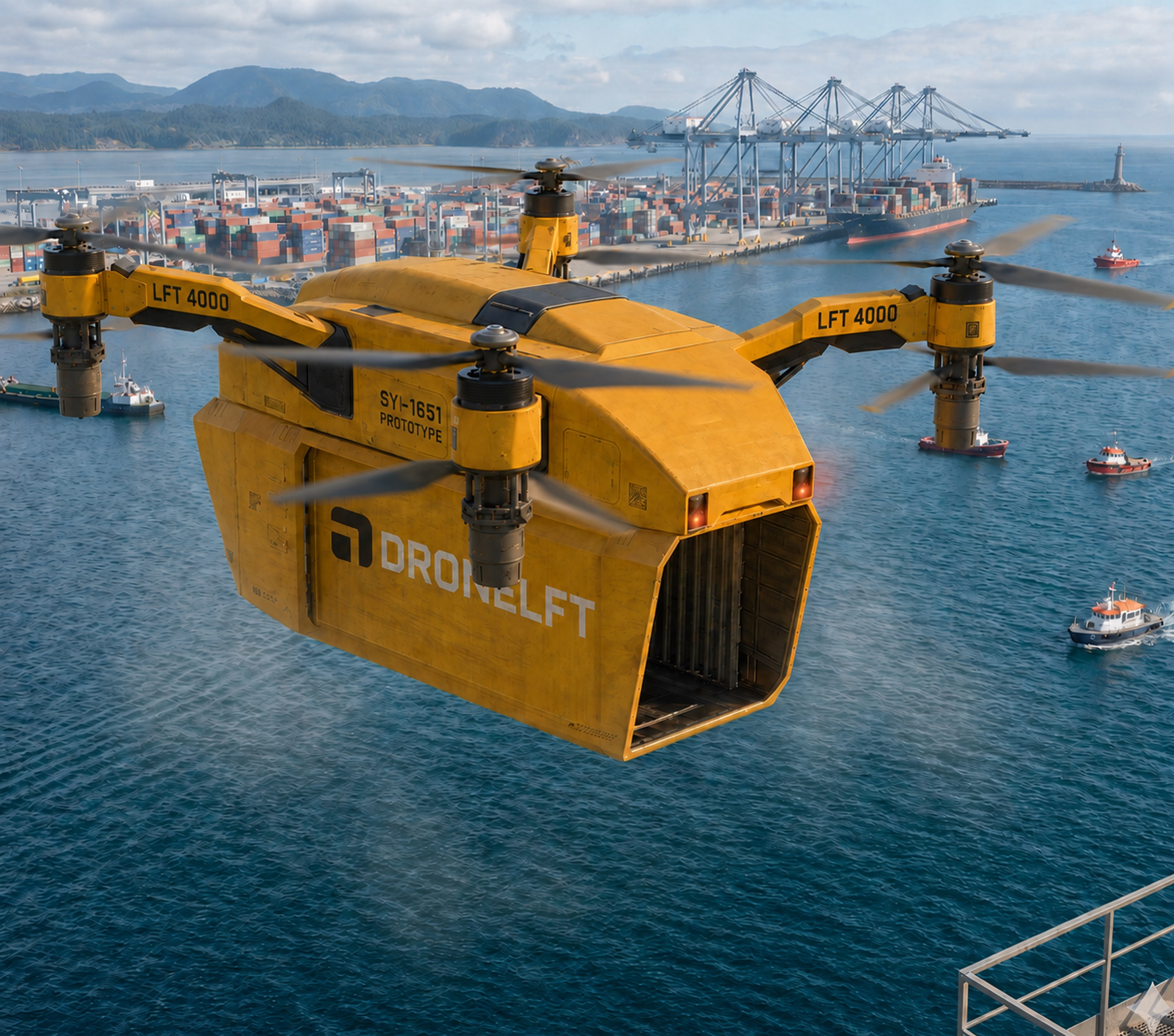
DroneLFT is an autonomous aerial logistics network. The aircraft is a standardized asset. The container is a standardized payload. The corridor is a recurring revenue stream.
Not a drone company.
One integrated aerial logistics platform.
DroneLFT is building the autonomous aerial logistics layer for heavy cargo — a heavy-lift multi-drone platform that moves containerized cargo across repeat, high-friction corridors where roads, ports, rail, bridges, and helicopters are too slow, too expensive, or simply unavailable.
It is an integrated platform built around three pieces: a heavy-lift aircraft, proprietary 8ʹ, 10ʹ, and 20ʹ modular cargo containers, and pre-approved air corridors operated as recurring logistics infrastructure. The model shifts heavy cargo from one-off helicopter charters to high-frequency corridor service, priced by capacity-adjusted weight.
DroneLFT V1
Quad-rotor heavy lifter. Up to 3,100 lbs externally slung, 75-mile corridor range, autonomous BVLOS flight.
Modular Cargo Unit
Proprietary 8ʹ / 10ʹ / 20ʹ form factors. ISO 1496 corner castings. Stackable, ground-handling compatible, brand-visible.
Aerial Logistics-as-a-Service
Low-risk, high-frequency routes. FedEx-style capacity-adjusted weight pricing. Metered like a utility.
A continuous flow of cargo.
Not a one-time charter.
Helicopters fly one charter at a time. DroneLFT runs a route, billed per kilogram, with the economics of a metered utility.
- 01
Identify the corridor
A repeat route with terrain or distance constraints — oilfield-to-wellpad, port-to-platform, base-to-FOB.
- 02
Containerize the cargo
Freight is packed into standardized DroneLFT containers — 8ʹ, 10ʹ, or 20ʹ. Same form factor every flight.
- 03
Autonomous flight
The aircraft lifts containers externally and flies BVLOS over pre-approved, least-risk corridors.
- 04
Drop & cycle
Container is set down at destination; aircraft returns. Cycles repeat 4–8× per hour at peak utilization.
- 05
Bill per kilogram
Capacity-adjusted weight pricing — each shipment charged on the greater of actual or volumetric weight.
The world runs on infrastructure — and it's falling short.
The shortfall is concentrated in regions where roads, bridges, and ports are prohibitively complex, expensive, or simply impossible. In those environments, aerial logistics is the only economically viable supply chain.
Infrastructure investment required through 2040
Already-locked-in funding gap
People with no all-season road access
Annual GDP lost to infrastructure deficits in Africa
Two generations.
One architecture.
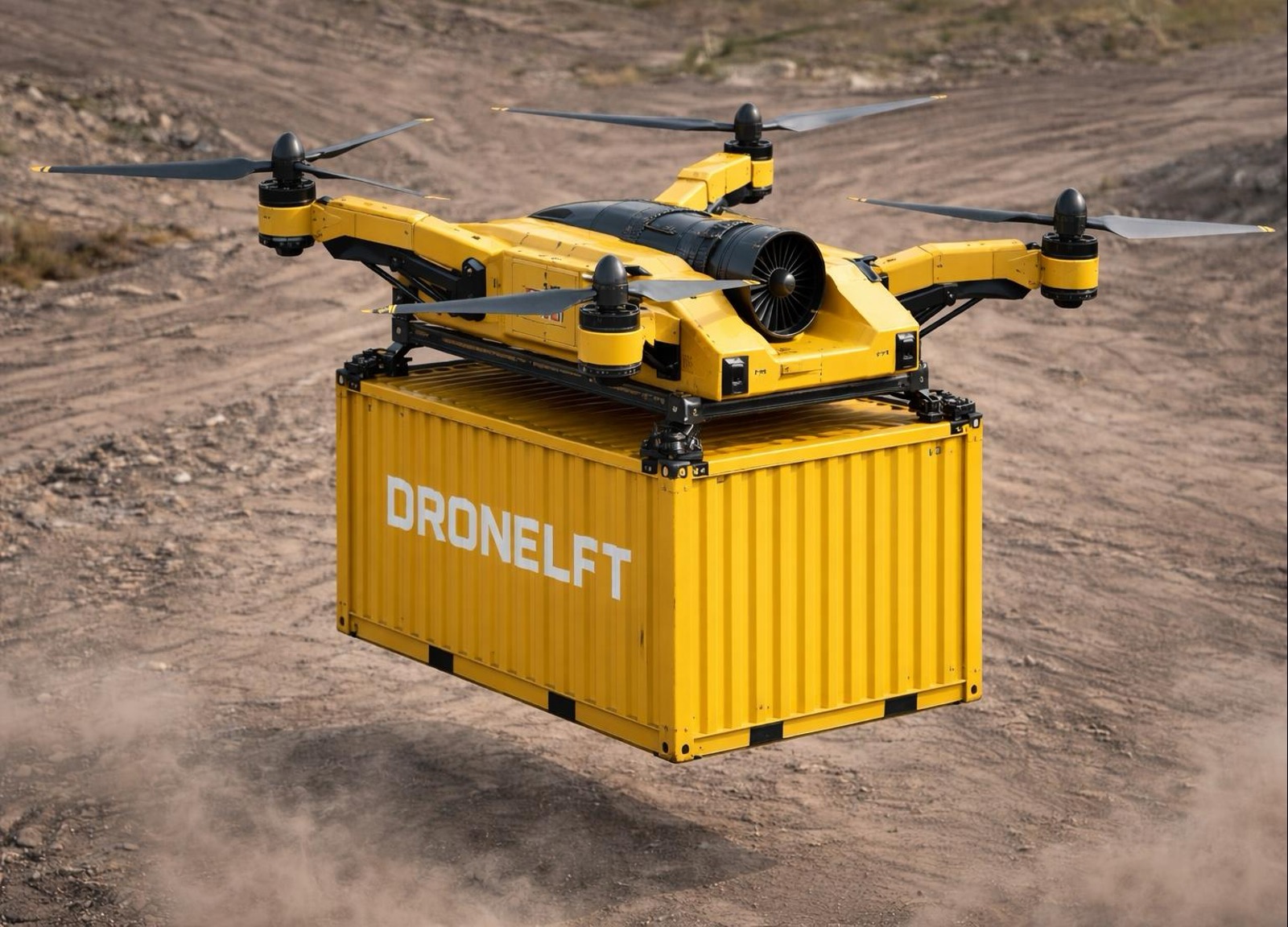
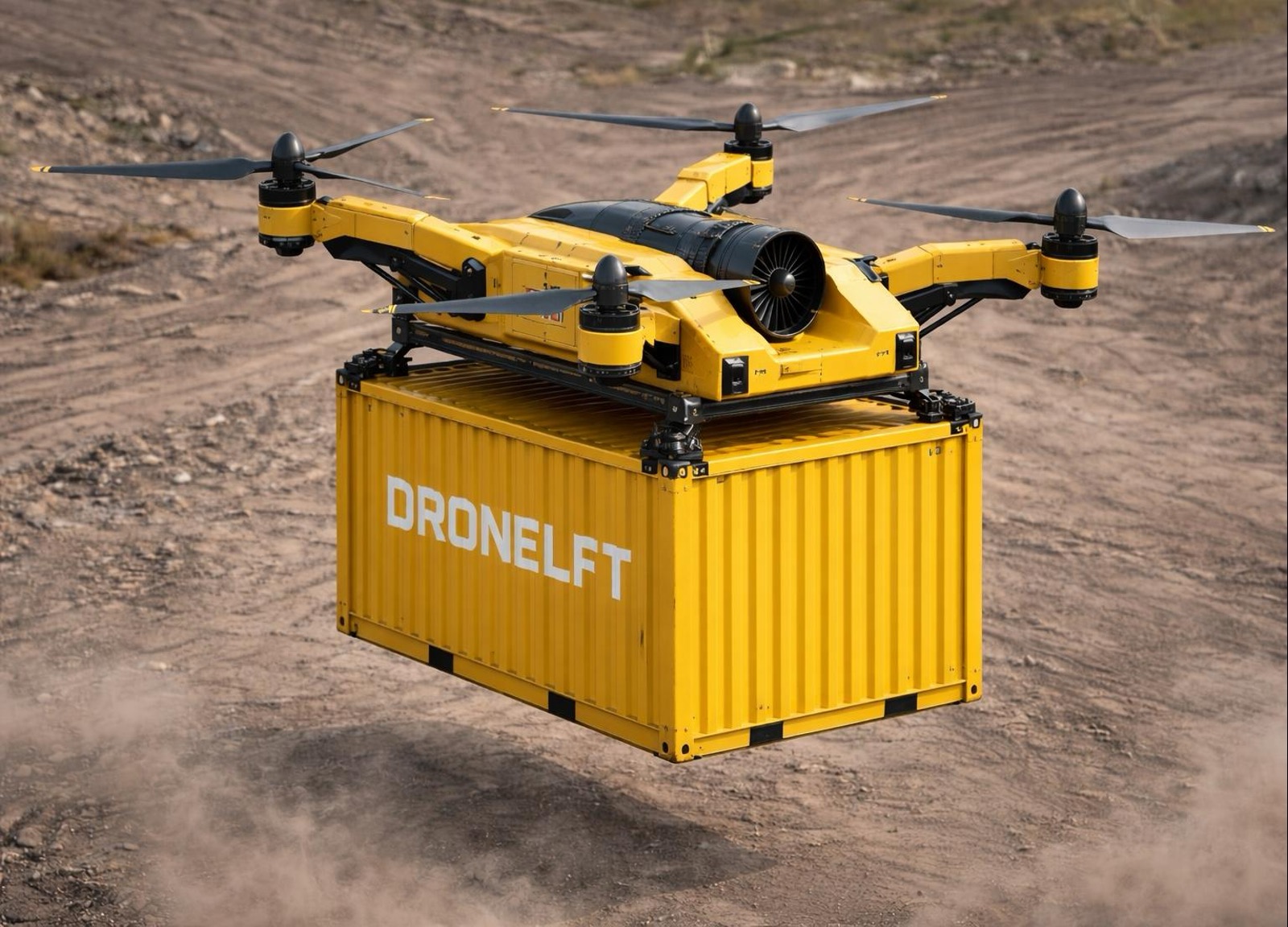
Down-selected from six trade-study architectures for stability and redundancy. The airframe footprint is sized to the roof of a standard 20-ft container.
Quad-Rotor Lifter
- Payload
- 2,300 – 3,100 lb
- Range
- 75 mi loaded
- Cruise speed
- ~80 mph
- Autonomy
- BVLOS · corridor-mode
- Container
- 8ʹ / 10ʹ / 20ʹ ISO-compatible
Coaxial Quad-Rotor
- Payload
- 4,100 – 5,400 lb
- Range
- 75 mi loaded
- Cruise speed
- ~105 mph
- Autonomy
- BVLOS · corridor-mode
- Status
- FAA application — 2032
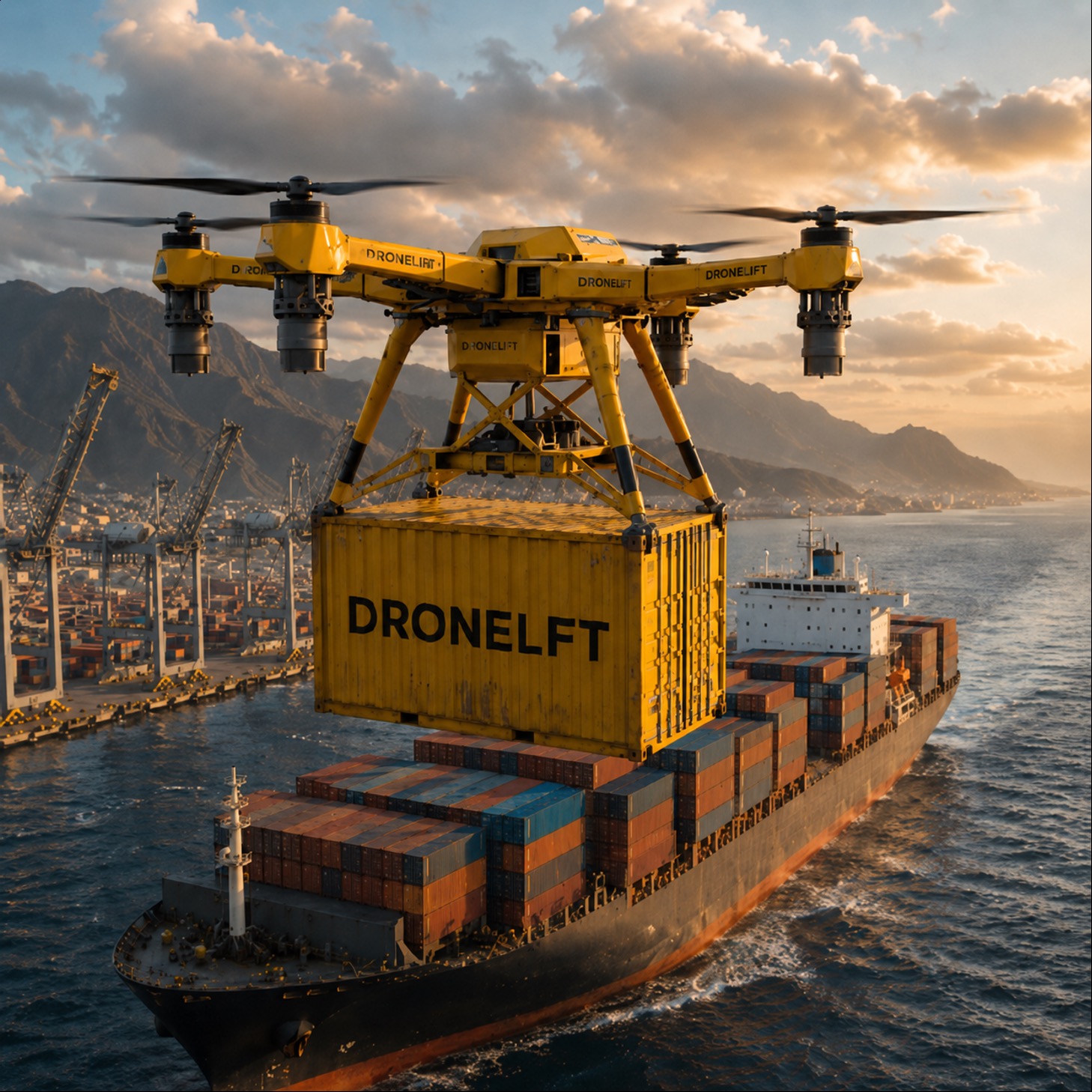
Proprietary. ISO-compatible.
Materials and design are our own. ISO 1496 corner castings mean we still lift existing freight stock when needed. Stackable, ground-handling compatible, and brand-visible.
- ▸Corner castings to ISO 1496
- ▸Stackable & ground-handling compatible
- ▸Brand-visible payload surface
- ▸Proprietary lightweight composite shell
Build the first
corridor with us.
Operators, defense partners, regulators, and engineers — if you move heavy things across hard places, we want to hear from you.